Agile Product Hub

Agile
ProductOwner
ProductManager
AgileHowToSeries
ProductStrategy
DigitalProduct
ProductLeadership
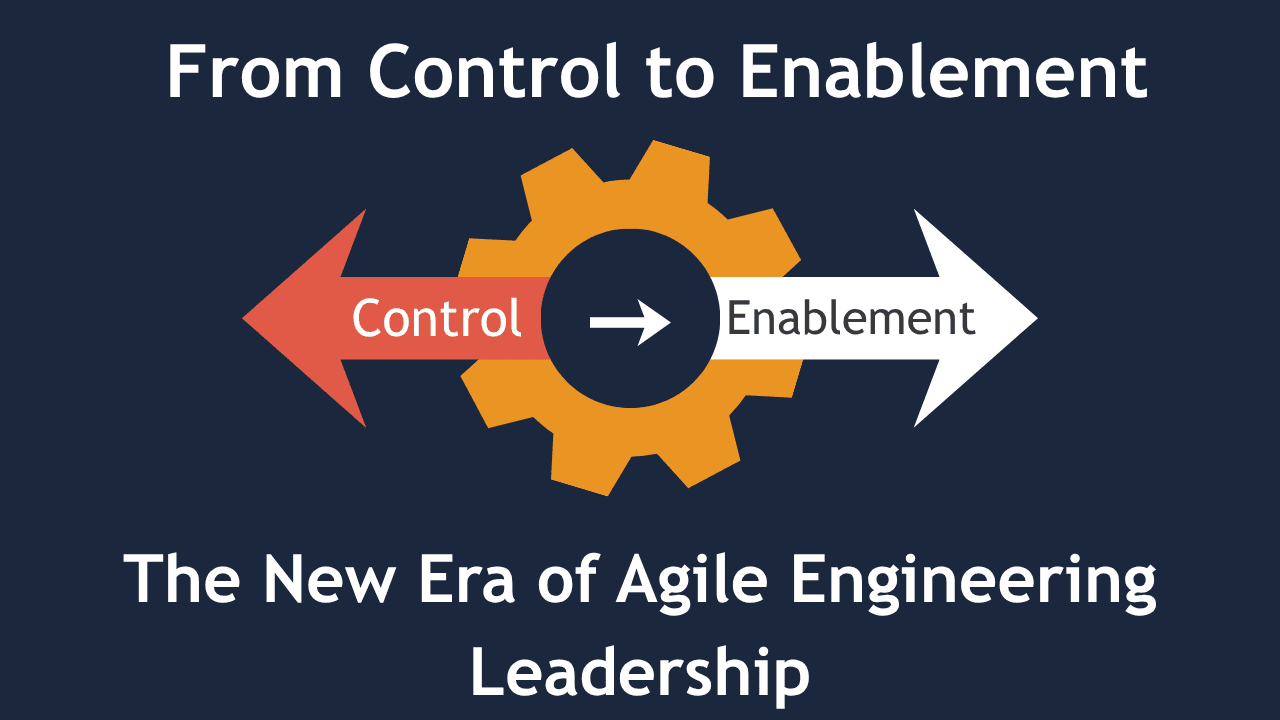
From Control to Enablement
Scaling teams? Driving delivery? Feeling the pressure to deliver more, faster, while also empowering your teams to take ownership? Welcome to modern engineering leadership. As a continuation from my last article The Power of Outcome Driven Roadmaps - lets continue with leadership...
In many organisations I’ve worked with, leaders are still operating under traditional models of control. They’re chasing output, enforcing processes, and struggling to let go of micromanagement habits that worked when teams were smaller or simpler.
But Agile delivery, scaling complexity, distributed teams, and now AI-enhanced development environments are reshaping what it means to lead. The old tools of control don’t fit this new world.
Leadership needs a mindset shift from control to enablement.
This article explores why engineering leaders must evolve and how enablement, not control, is at the heart of Agile leadership success.
Why Control Fails in Agile
Agile teams are designed to self-organise, adapt, and continuously improve.
When leaders try to enforce too much control, be it through rigid processes, tight timelines, or hyper-detailed oversight, two things happen:
Teams disengage. Autonomy is crushed.
Bureaucracy scales instead of value. The more you enforce, the slower and less adaptable teams become.
Excerpt from Agile How To: Lead in Agile as an Engineering Leader / Manager “Engineering leadership is no longer about enforcing timelines, it’s about shaping strategy and driving impact. Leaders succeed by creating an environment where teams thrive, not by directing every move.”
Control feels safe. It gives the illusion of certainty. But in today’s fast-moving, complex digital environments, it’s adaptability, not control, that drives success.
What Enablement Looks Like
Enablement is leadership that empowers teams to solve problems, adapt, and deliver value without losing alignment.
Shift from telling to coaching. Don’t direct tasks, ask the questions that help teams find the right answers.
Focus on outcomes, not outputs. Care about what changes, not what gets built.
Trust but verify through feedback loops. Use metrics, retrospectives, and customer insights, not task lists, to stay aligned.
This doesn’t mean hands-off leadership. It means intentional leadership, focused on creating the right environment, providing the right support, and holding space for teams to own their delivery.
Excerpt from Agile How To: Lead in Agile as an Engineering Leader / Manager “Leaders set the conditions for success, alignment, psychological safety, and the right balance of challenge and support. Enablement is the lever that allows teams to move from good to great.”
The Challenge of Scaling
As teams scale, old habits resurface. More people means more risk of silos, process bloat, and communication breakdowns.
Leaders often respond by adding layers of control: more meetings, more reports, more rules. But this doesn’t scale Agile, it chokes it. I'm not an advocate of SAFe because I have only seen it drive micro management practices, but we still need to figure out scaling and cross team dependencies and overall alignment. I have seen LeSS, Nexus, scrum of scrums and other models which still align with true enablement work in large corporations. Still planning in cycles - but allowing the teams to plan and agree based on outcomes planned to be achieved.
What scales is enablement:
Clear outcomes. Everyone knows where they’re going.
Consistent principles. Teams share values, not just processes.
Autonomy within alignment. Teams have freedom, but they’re pulling in the same direction.
Excerpt from Agile How To: Lead in Agile as an Engineering Leader / Manager “Scaling Agile isn’t about replicating processes - it’s about amplifying alignment and trust across teams. The role of the leader is to guard the principles, not micromanage the execution.”
What About AI?
In 2025, AI isn’t replacing leaders, it’s reshaping their focus. (Many of us worry about loosing our jobs to AI, but don't shy away, learn to use AI and leverage its strengths.
AI can help with:
Predictive analytics for sprint planning and risk management.
Automated testing and quality assurance.
Code generation for routine tasks.
Product analytics driving insights in minutes versus days by a human.
But AI doesn’t replace human judgment, empathy, or leadership. Leaders must learn to integrate AI tools as enablers, freeing up teams to focus on the complex, creative, and human-centred work that drives real value.
Are You Leading Through Control or Enablement?
Here’s a quick check:
Do you review metrics for learning or for punishment?
Are your teams problem-solvers or task-followers?
When something goes wrong, do you tighten controls or improve the environment?
Final Thought
Control might feel like the safer option, but enablement is what delivers results. In today’s Agile world, leaders aren’t there to direct, they’re there to support, challenge, and empower.
If this resonates, I dive deeper into these concepts in my new book: Agile How To: Lead in Agile as an Engineering Leader / Manager. Launching soon, this book offers practical guidance for leaders navigating the complexity of Agile at scale, empowering teams, and leading with impact.
What’s your experience? Are you seeing the shift from control to enablement in your organisation?
Let’s discuss.